Inspect before promising value
Every garden starts with a real assessment of sun, water, access, safety, crop fit, and usable growing area.
The solution is not one garden design copied everywhere. Urban Farming uses a modular operating model: inspect the space, classify its potential, match the setup, track harvest proof, then unlock the right benefit for the grower and community.
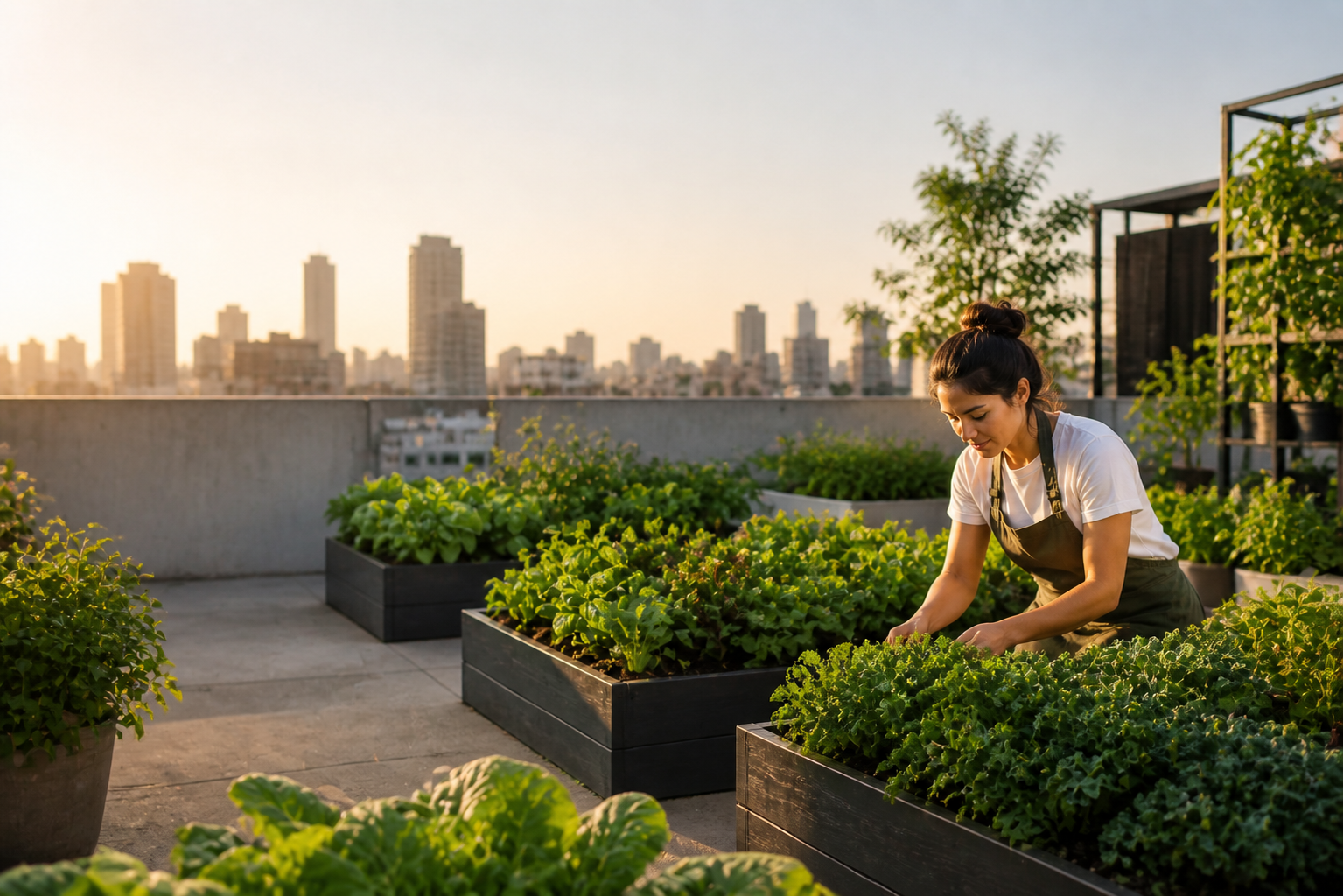
Core principle
Every space can apply. Not every space unlocks the same production rights.
Every garden starts with a real assessment of sun, water, access, safety, crop fit, and usable growing area.
A balcony, backyard, rooftop, vertical wall, or community plot receives the setup that fits its constraints.
Personal harvest, percentage-back, payout, and hub supply only unlock after verified harvest records.
Individual gardens become useful faster when they connect into a mapped suburb cluster with shared output.
How it works
This protects the grower, the buyer, and the community. A household can start small, but it only moves into supply, payout, or suburb-hub benefits after the garden proves it can produce consistently.
Register the growing space
The grower submits suburb, space type, size, photos, water access, sun exposure, intended crops, and goal.
Classify the site
Inspection decides whether the space is a learning garden, contributing garden, productive node, or not viable yet.
Match the module
Urban Farming recommends the correct setup: containers, raised beds, grow bags, vertical panels, irrigation, crop plan, or education path.
Activate and track
The garden moves into a practical growing plan with harvest logs, quality checks, crop-cycle evidence, and support resources.
Unlock the right benefit
The grower can keep produce, receive a percentage back, qualify for payout, or join a hybrid model when output supports it.
Grow the suburb hub
When enough verified spaces in the same suburb produce consistently, the area can become a private local food hub.
Modular system
Modularity matters because urban spaces are inconsistent. The platform can support a windowsill, a balcony, a backyard, or a shared plot without pretending they are equal. Each module controls a different part of the decision.
Where it grows
Classifies the physical site: rooftop, balcony, backyard, courtyard, front yard, indoor, vertical wall, allotment, or shared plot.
How it is built
Defines beds, containers, grow bags, trellis systems, irrigation, crop zones, soil media, and safe access.
What should grow
Matches crops to sunlight, water reliability, season, growing area, household goal, and expected maintenance load.
How value flows
Routes each garden toward personal harvest, percentage-back, payout, hybrid sharing, or hub contribution once verified.
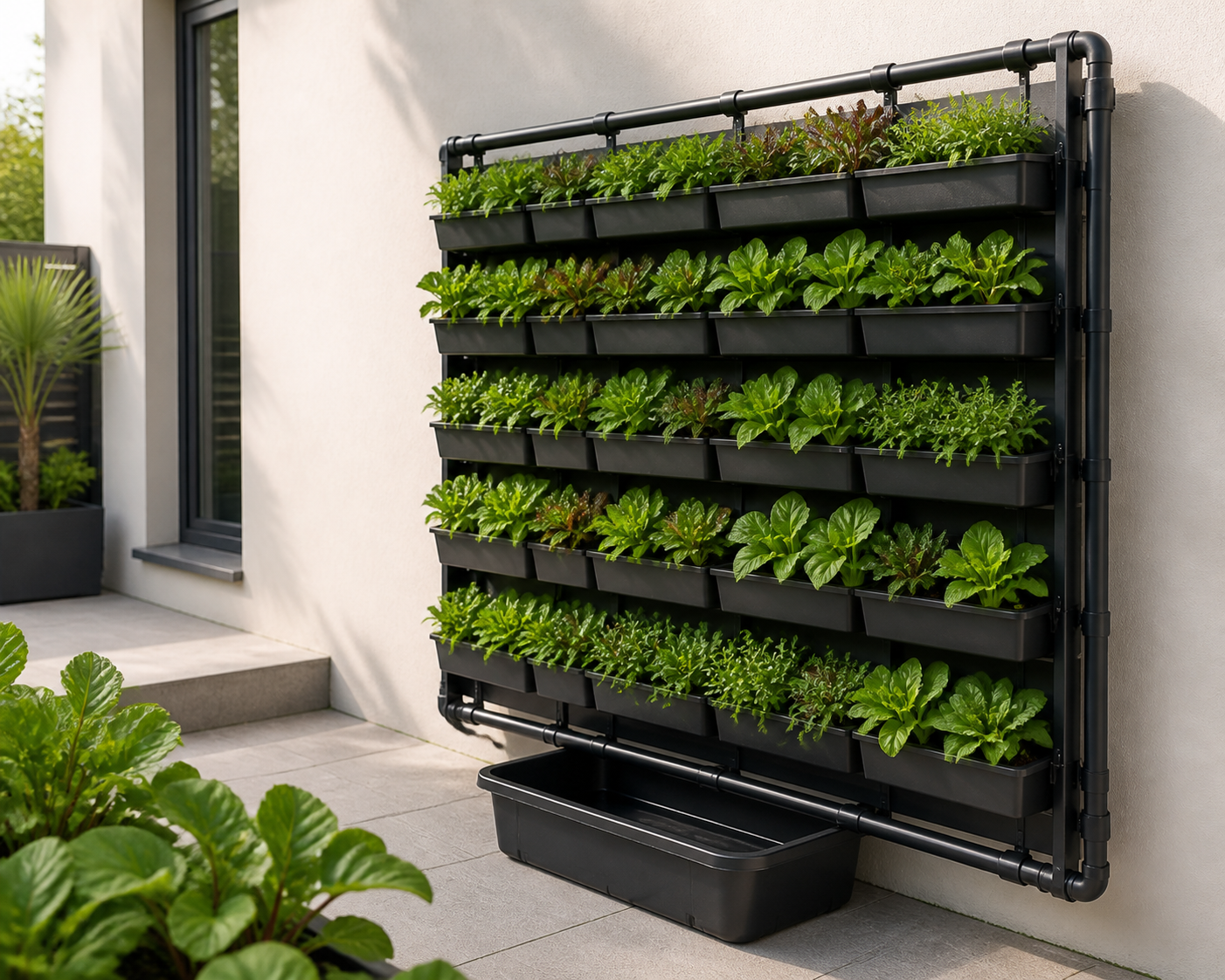
The physical build follows the inspection result, not a generic garden template.
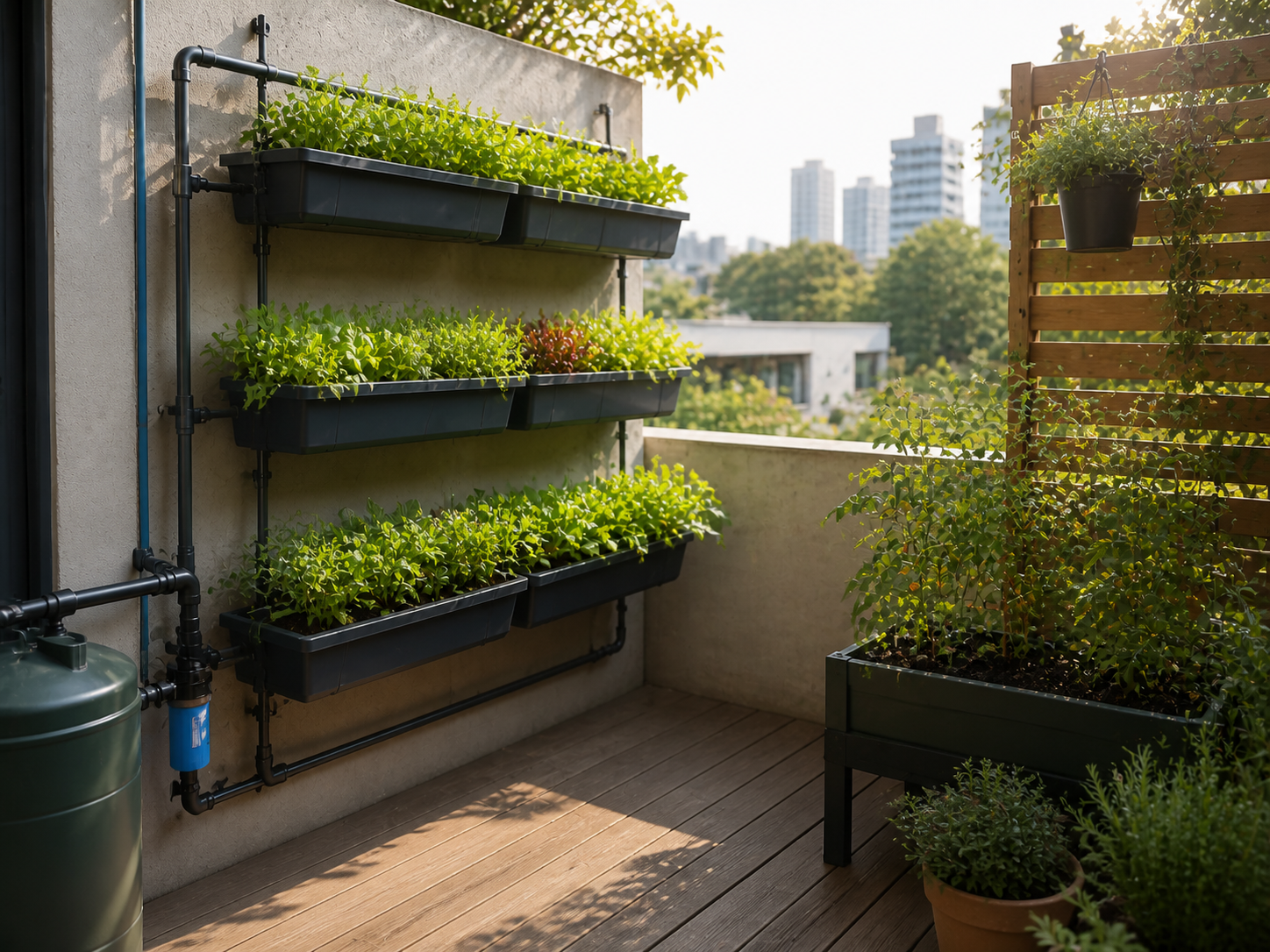
Vertical and container systems let compact sites participate without over-promising output.
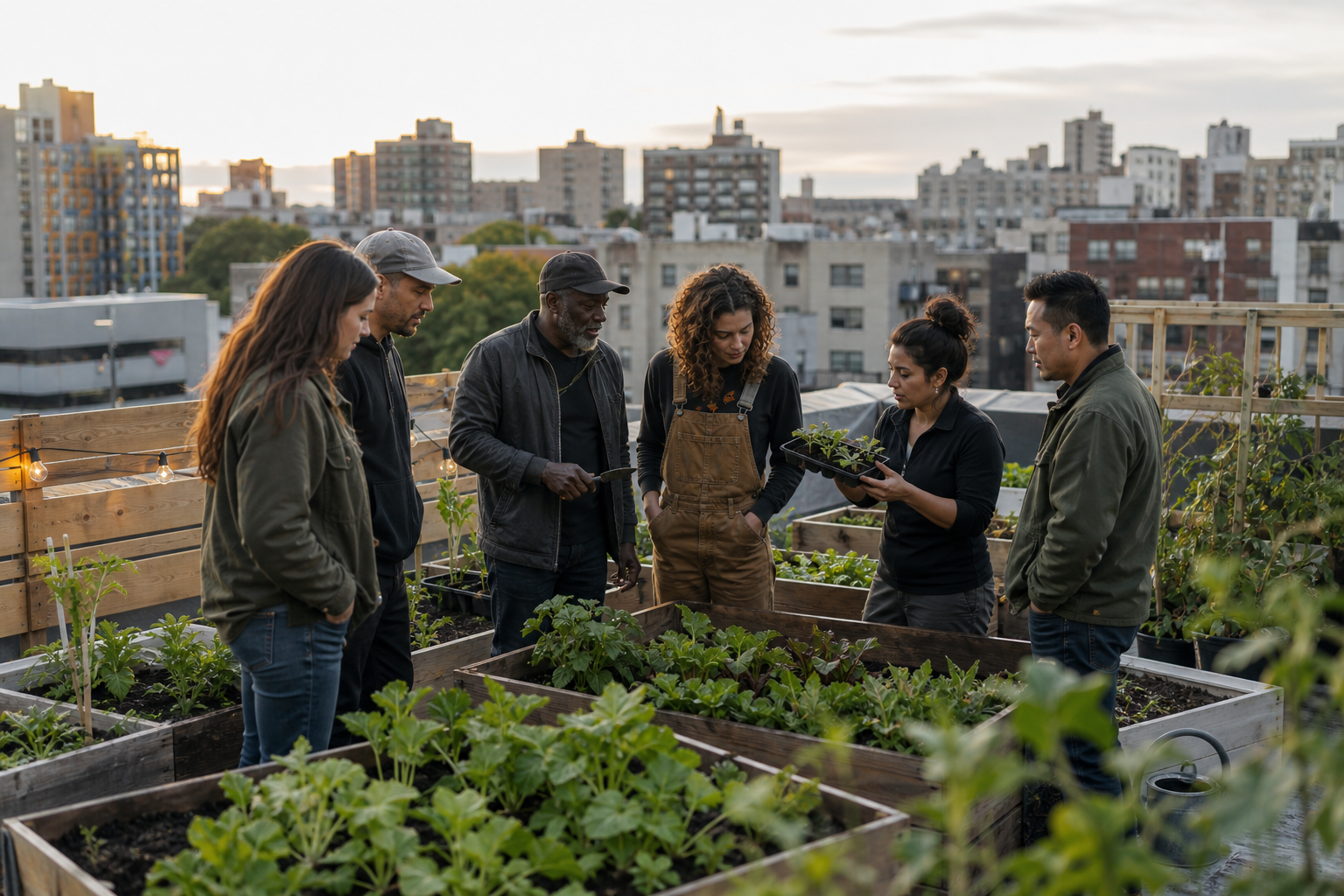
Benefits are earned through tracked harvests, quality checks, and repeatable production.
Concept applications
These are not spec sheets. They are the practical application types residents should recognise before they apply. The inspection decides which solution is viable, what crop plan fits, and whether the site starts as education, personal harvest, contribution, or a productive node.
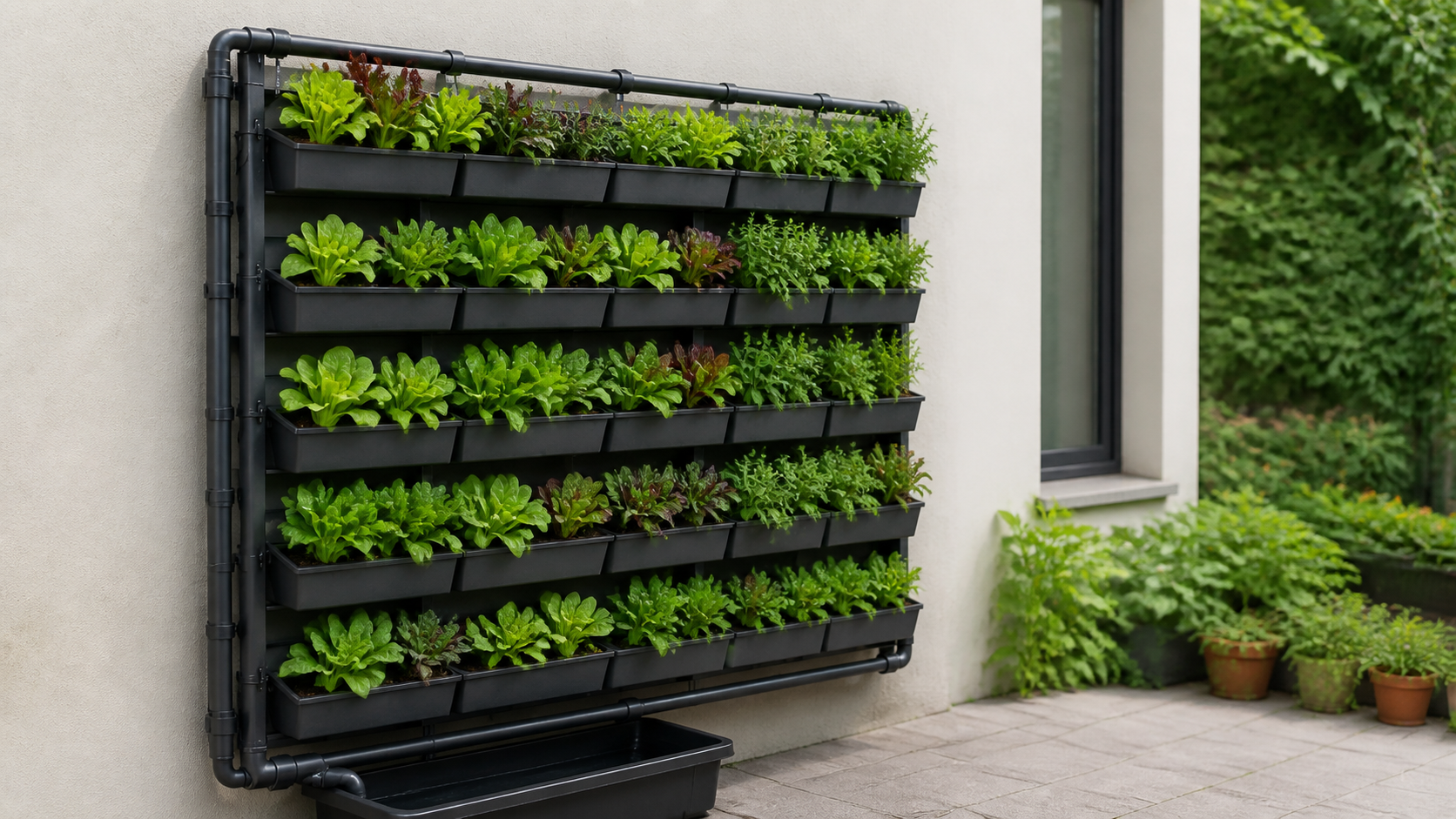
Solution type
Best fit
Boundary walls, service yards, narrow walkways, and compact residential edges.
How it works
Uses vertical surface area to create controlled planting rows without taking over usable floor space.
Different ways this can be used
Starter learning wall for first-time growers.
Herb and leafy-green strip close to a kitchen or service yard.
Compact supply module for households that cannot sacrifice floor space.
Add-on module beside raised beds to increase yield density.
Activation check
Inspection checks wall strength, sun hours, water access, safe mounting points, drainage, and maintenance reach.
Good for herbs, leafy greens, and quick-cycle crops where the household has limited ground area but usable sun.
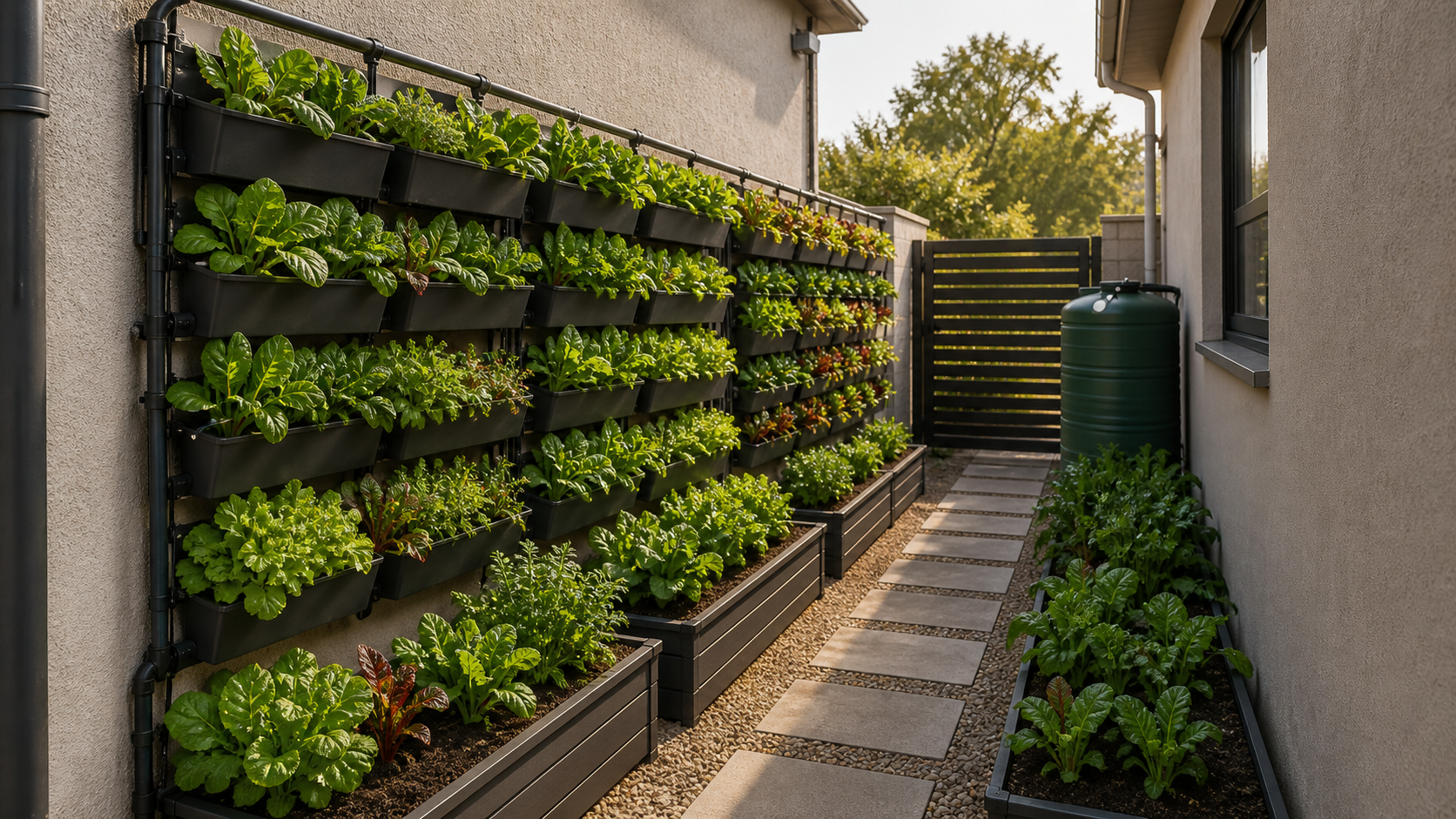
Solution type
Best fit
Long side passages, perimeter walls, and unused access lanes beside homes.
How it works
Turns dead side space into a managed growing lane while preserving movement, irrigation access, and serviceability.
Different ways this can be used
Narrow household production lane for leafy greens.
Shared lane between units where access can be controlled.
Perimeter-wall upgrade for larger properties with unused service space.
Suburb-density module when many homes have similar side passages.
Activation check
Inspection checks minimum path width, shade from neighbouring walls, drainage, trip risk, hose routing, and service access.
Creates repeatable output from space most households normally ignore, making it ideal for suburb density.
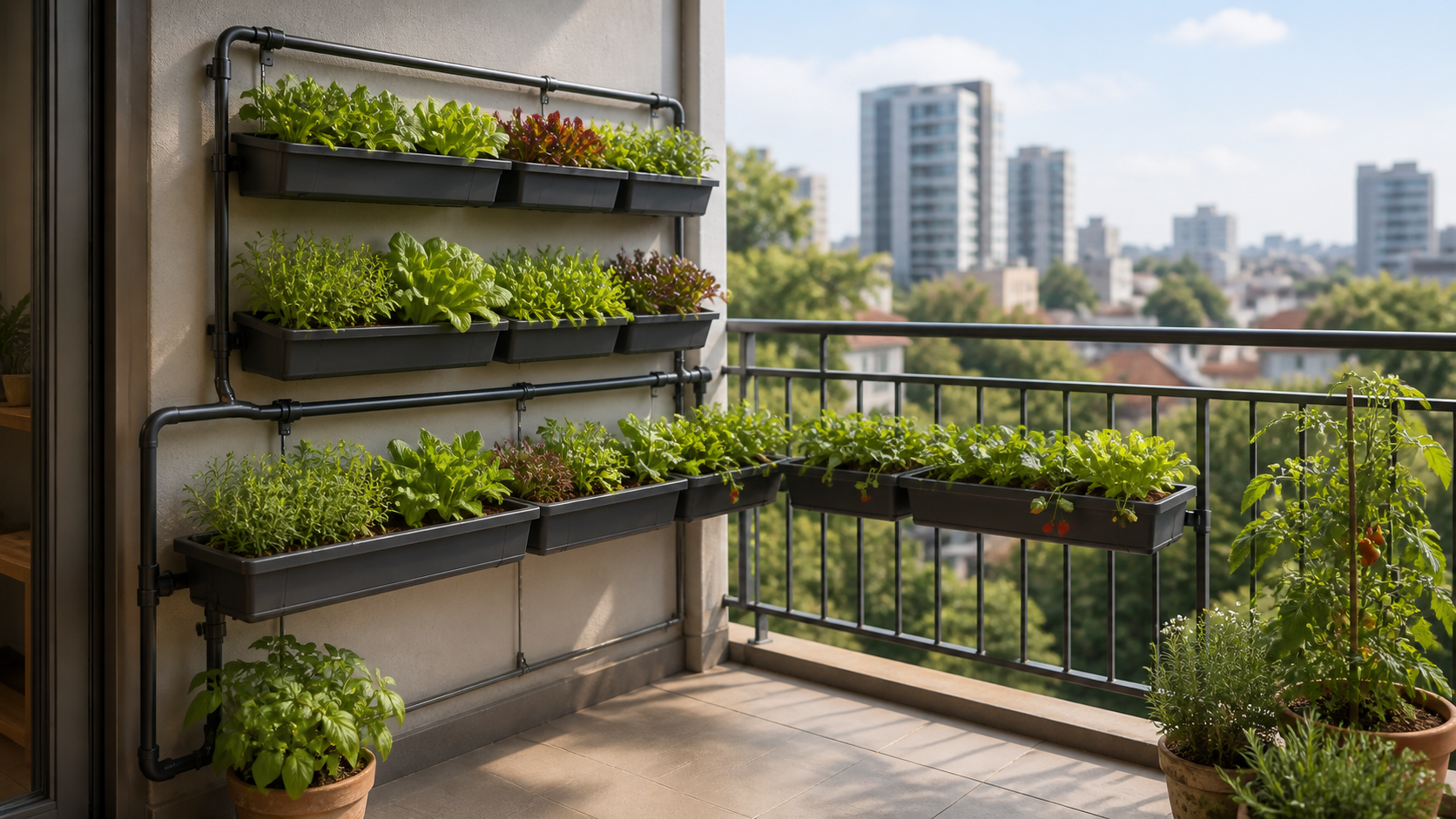
Solution type
Best fit
Balconies, verandas, patios, rental units, and small paved areas.
How it works
Keeps production contained, removable, and safe for tiled or raised residential areas.
Different ways this can be used
Rental-friendly grower that can be removed without structural damage.
Personal-harvest setup for apartments and compact homes.
Balcony herb and salad garden with water containment.
Training unit before the household expands into larger production.
Activation check
Inspection checks weight loading, wind exposure, railing safety, drainage containment, sun direction, and landlord constraints.
Lets smaller homes participate first as learning or personal-harvest gardens before supply promises are made.
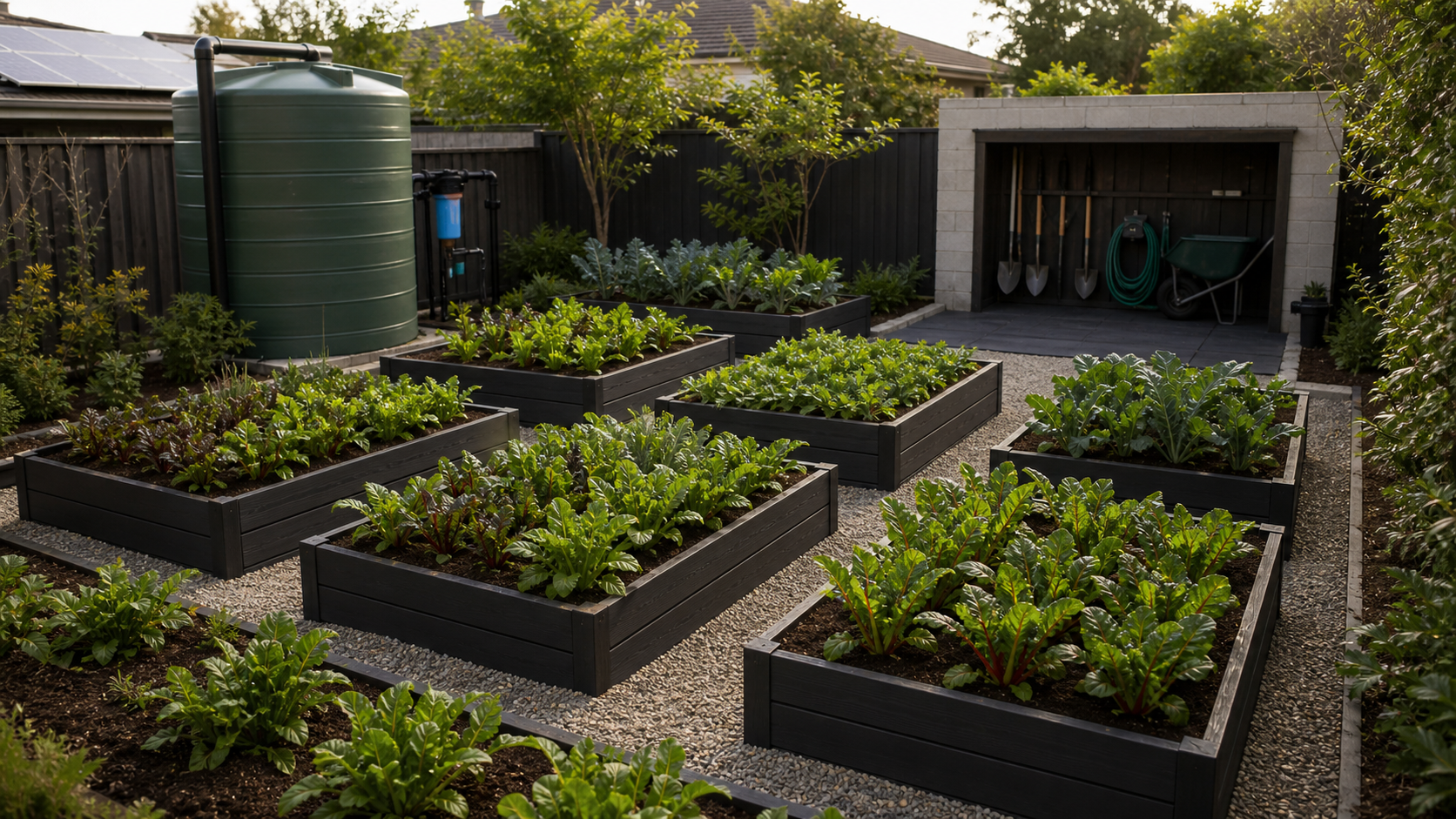
Solution type
Best fit
Backyards, open beds, courtyards, school gardens, and shared community plots.
How it works
Organises open land into inspected growing zones, access paths, water points, and crop rotation blocks.
Different ways this can be used
Household productive node for payout or percentage-back once output is proven.
School or church garden with managed beds and clear access paths.
Community plot that can support multiple crop cycles.
Anchor garden inside a future self-sustaining suburb hub.
Activation check
Inspection checks soil/media plan, bed layout, water reliability, crop rotation, pest control, storage, and harvest handling.
Best suited for productive-node status because it can scale crop volume and prove harvest consistency.
Principle design by space
Residents should see up front why their space may start as education, move into contribution, or qualify as a productive node. These principles make the model transparent before inspection.
Rooftop
Raised beds, grow bags, drip irrigation, wind protection, and lightweight growing media.
High-light production node when access, wind, load, and water are safe.
Can reach contribution or payout status after harvest history confirms reliable output.
Balcony
Containers, railing planters, vertical racks, compact trellis systems, and drip trays.
Compact household growing space for herbs, leafy greens, and small fruiting crops.
Usually starts as learning or percentage-back, with contribution only after proven surplus.
Backyard
Raised beds, soil plots, composting, drip irrigation, crop rotation, and seasonal planning.
Primary household production space with room for meaningful crop rotation.
Strong candidate for contribution, hybrid, or payout status after quality checks.
Windowsill
Small pots, seedling trays, herbs, microgreens, and compact leafy greens.
Entry-level growing space for education, herbs, and seedlings.
Learning garden only; not suitable for community supply or payout without expansion.
Vertical Wall
Pocket planters, stacked towers, trellis crops, drip lines, and modular vertical panels.
Space-efficient growing surface for herbs, leafy crops, and high-density small plants.
Learning or contribution depending on size, crop type, and repeat harvest records.
Community Plot
Allocated beds, shared irrigation, crop zones, notice boards, composting, and harvest logging.
Shared growing area that can support education, coordination, and suburb hub density.
Can become a hub contribution asset when governance and harvest records are clear.
Benefits
A modular solution gives every role a clear reason to participate while keeping the promise grounded in real growing capacity.
New, small, or learning gardens.
The household keeps its crops and builds confidence before being asked to supply anyone else.
Viable gardens with repeatable surplus.
Urban Farming can coordinate some output while the household receives a defined share back.
Productive nodes with reliable quality and quantity.
The garden becomes part of a managed supply system where production can create income.
Clusters of inspected spaces in one suburb.
A private community can unlock local produce access when enough verified output exists.
Next action
The right first move is not to promise free community produce immediately. The right first move is to inspect spaces, prove output, and let verified production density unlock stronger benefits over time.

Supply, payout, and community allocations are gated by verified production.