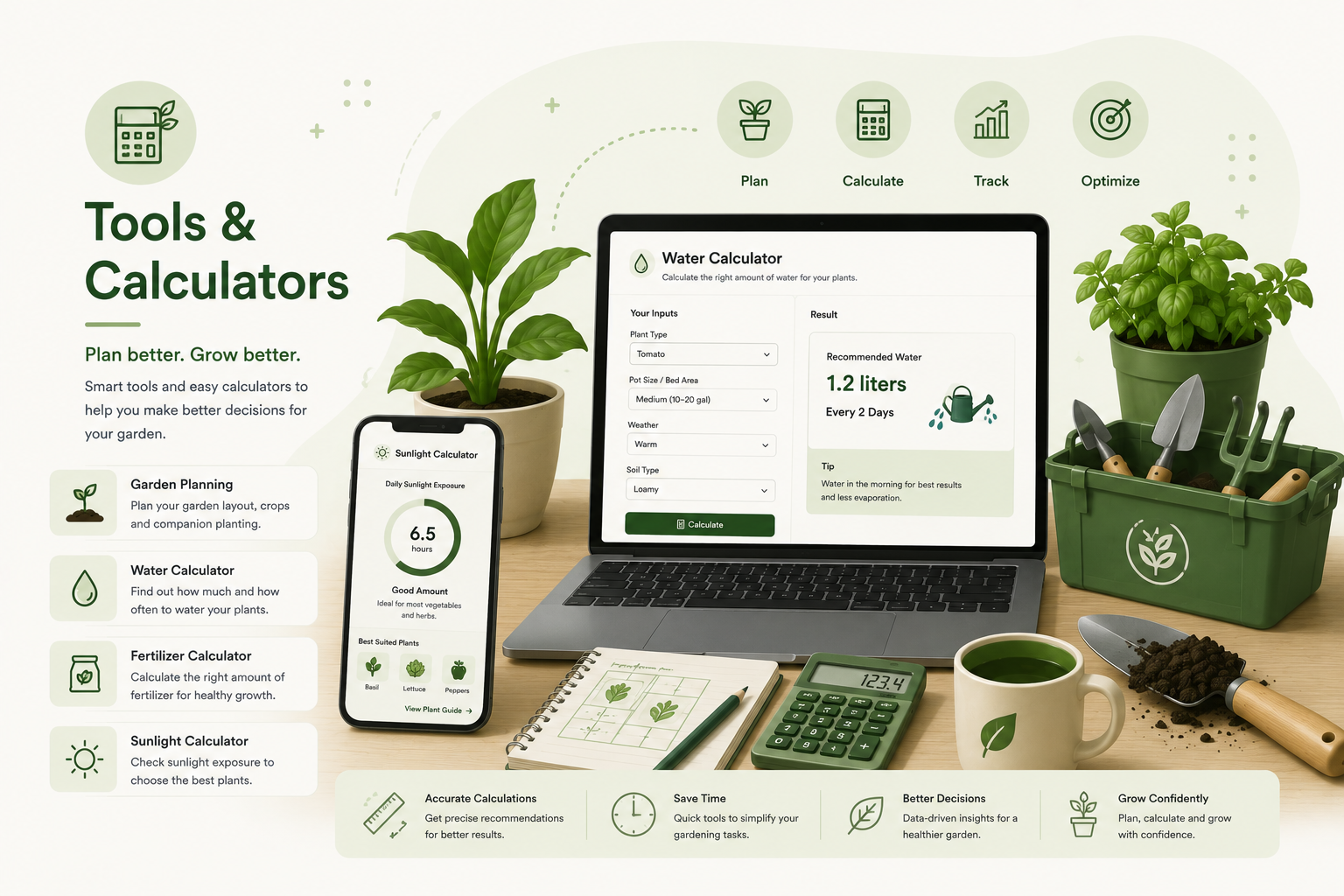
Tools & Calculators learning category
Plan before planting

Tools & Calculators

Interactive tools for spacing, watering, bed planning, harvest estimation, and inspection readiness.

Resource pathway

Start free. Upgrade when the garden needs a system.

Free basics

Free tools handle essential spacing and watering decisions.

Use free resources

Paid deeper guides

Paid tools should unlock yield estimates, crop economics, and buyer-readiness planning.

Unlock premium

How this section should work

Free content builds trust and helps beginners move. Premium content should be structured, branded, downloadable, and valuable enough for growers or hubs that want repeatable results.

Plan before buying soil, seed, or beds.

The tools page should feel more operational than editorial. Each tool must answer a decision: how much, how often, what fits, and whether the site is ready.

Spacing

Decision support module

Watering

Decision support module

Light

Decision support module

Yield

Decision support module

Epic Gardening video shelf

Relevant videos from Epic Gardening

These are curated into Urban Farming categories so the resource area stays useful, not just a feed of unrelated YouTube content.

View channel

Urban Farming branded article

Tools & Calculators: practical operating guide

This is the first branded guide body for this category. It gives the user useful guidance now, while the premium items above define what can become paid content.

Back to resources
1

Tools turn ideas into decisions

A calculator should answer a practical question before a grower spends money or plants the wrong crop. The first tools should cover spacing, water, bed size, light requirements, and whether a crop fits the site. Later tools should estimate yield, surplus, and buyer-readiness.

  • Spacing prevents overcrowding and gives the grower a realistic plant count.
  • Watering tools help avoid the two common beginner errors: drowning plants or letting containers dry out.
  • Light requirement tools help inspectors and growers agree on what can actually grow.
2

Free tools should remove beginner friction

The free layer should make the first garden easier to start. It should not require expert knowledge. A user should be able to enter a bed size, crop choice, and basic conditions, then get a simple recommendation.

  • Use plain-language outputs, not technical-only gardening terms.
  • Keep inputs short for the first version.
  • Show next actions: plant count, watering rhythm, and which guide to read next.
3

Premium tools should support production

The paid layer should help growers and hubs answer operational questions: how much can this space produce, how much can the household keep, when will there be surplus, and whether the output is enough for a buyer channel.

  • Yield estimation should connect crop type, bed area, season, and harvest cycle.
  • Surplus planning should separate personal use from community or buyer supply.
  • Inspection scoring should flag blockers before someone books an inspector.

Next action

Put the guide into practice before scaling.

Start with the free basics, use the calculators and templates where relevant, then move into premium resources only when the space is ready for a repeatable growing system.